Home / Collector's guide / Is my anime cel real?
This isn't a binary yes or no. There are many questions we have to answer as collectors and specialists. What can the piece NOT tell you? What kind of copies exist? What does the piece come with? What is the history of the piece, if available? What does the science say?
By Heather Russell, Accredited Member, Appraisers Association of America ·
The glossary pictures on this page are AI-generated illustrations of each kind of piece. They are not photographs of examined pieces; those are on the records.
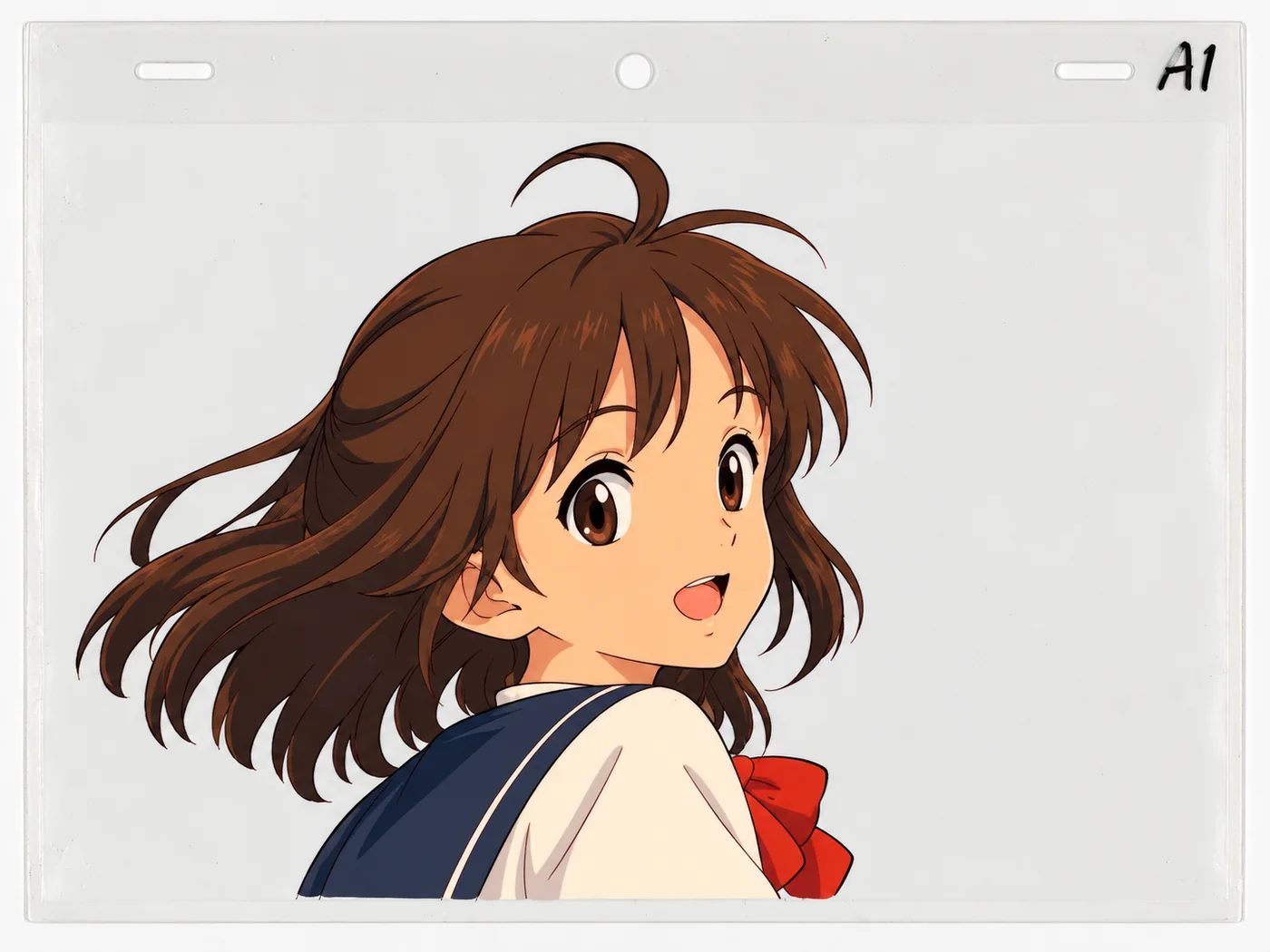
An original production cel is a hand-painted, transparent sheet that was photographed as one frame of the animation. Every frame is one of a kind.
"Real" is nuanced. A hanken cel was created by the studio for merchandise, not for broadcast. An animator really liked their own work and wanted a record, so they painted another cel from the douga and brought it up. A cel was created for production, but hit the cutting room floor and was never photographed. The question here is never only, "is it real", but "what, exactly is it"?
The breakdown of an animation cel: the glossary →
In between the space of production cel and a forgery sits pieces that are genuine and still not what they are sold as. "Is it real?" cannot be answered for these, but listing all we know about what they are, can be.
A cel painted for production, but cut out of the episode. Made for the episode by the studio, but never photographed because the cut was dropped or a retake replaced it. A genuine production cel with no frame anywhere to match it to.
A retake, a reshoot, or a touch-up. The piece that replaced the first, or the first version that aided once, but was swapped before the home release. Both were filmed.
A staff copy. A common practice, but animation teams wanted records of their work, so they sometimes would paint a second cel for themselves from the production douga, on the studio's stock, with the studio's paint. A genuine studio hand on a genuine drawing, never filmed. [描き起こし].
A cel the studio made to sell. Sericels, cels made from douga from films that are made only with CG, hanken cels. etc. These are genuine studio cels, never filmed.
Each one of these are examples that fail a screen match, yet each one is authentic. We need history and science to create a record. There is no single way to identify what is real and why the question a record answer is not "real or fake", but what the piece is, which studio, which cut, which kind, what the history is, etc.
Each of these is real evidence. None of them is final on its own, and the last line of each entry says why.
A production cel was traced on the front and painted on the reverse, so the line sits on top of the colour. Turn it over: the paint is matte and brushed, and under a glass the colour stops at the line. The limit: copies made by hand are painted exactly the same way. This tells you how the sheet was made, not whether it was filmed.
The outline was traced by hand or transferred by machine from the drawing, and it has aged: it can go brown, it thins and thickens, it breaks. A line that is perfectly black, perfectly even and perfectly intact on a sheet that is supposed to be forty years old is a printed line. The limit: the forgeries Japanese collectors call okoshi were made from a leaked production drawing, often through the same trace machine the studio used, so the line is the real line.
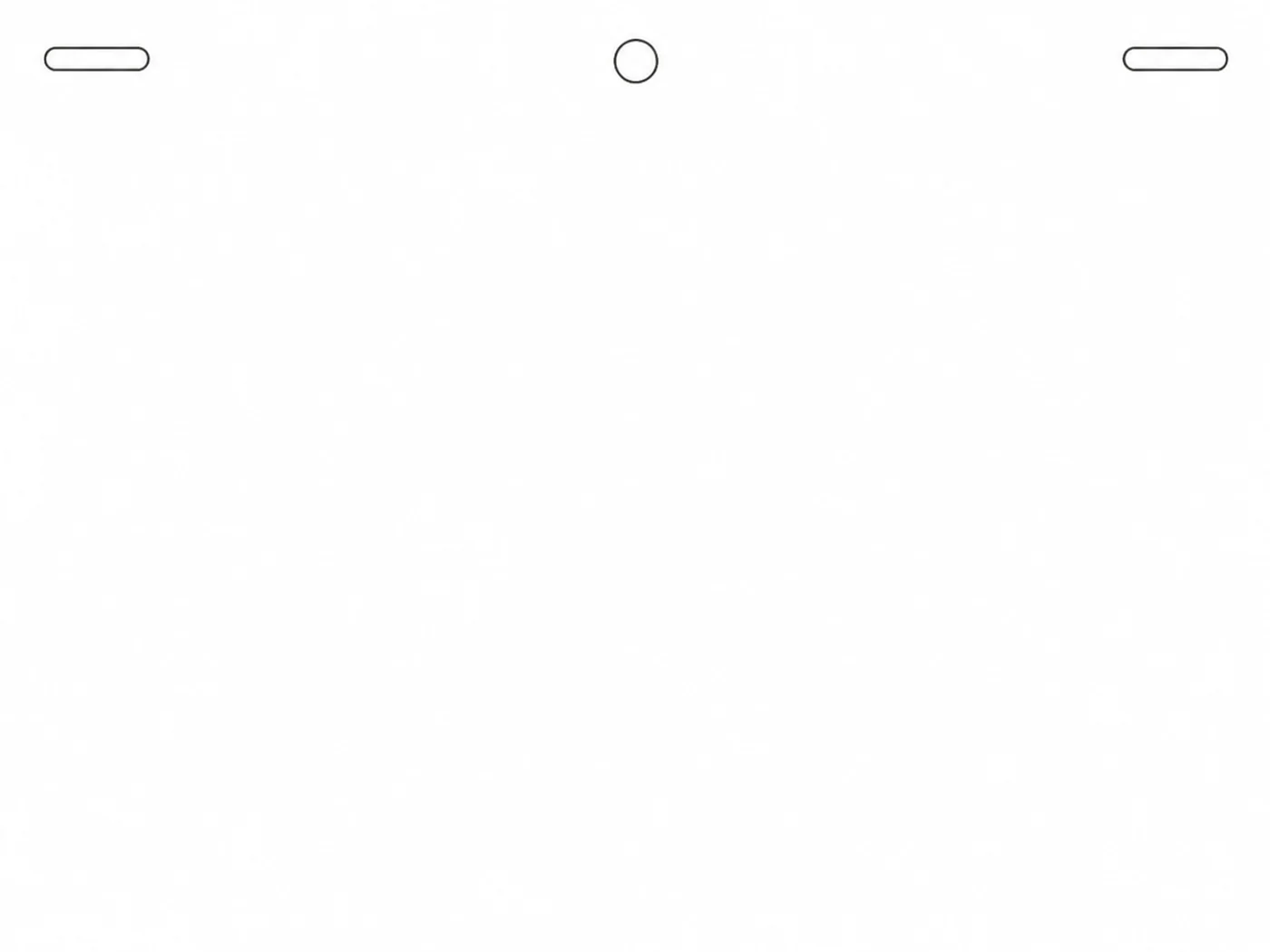
Every production sheet, cel and drawing alike, has registration holes along one edge, where it sat on the peg bar under the camera. Their shape and spacing belong to the studio's equipment. The limit: blank cel stock with peg holes was sold by the thousand, and every copy is painted on it.
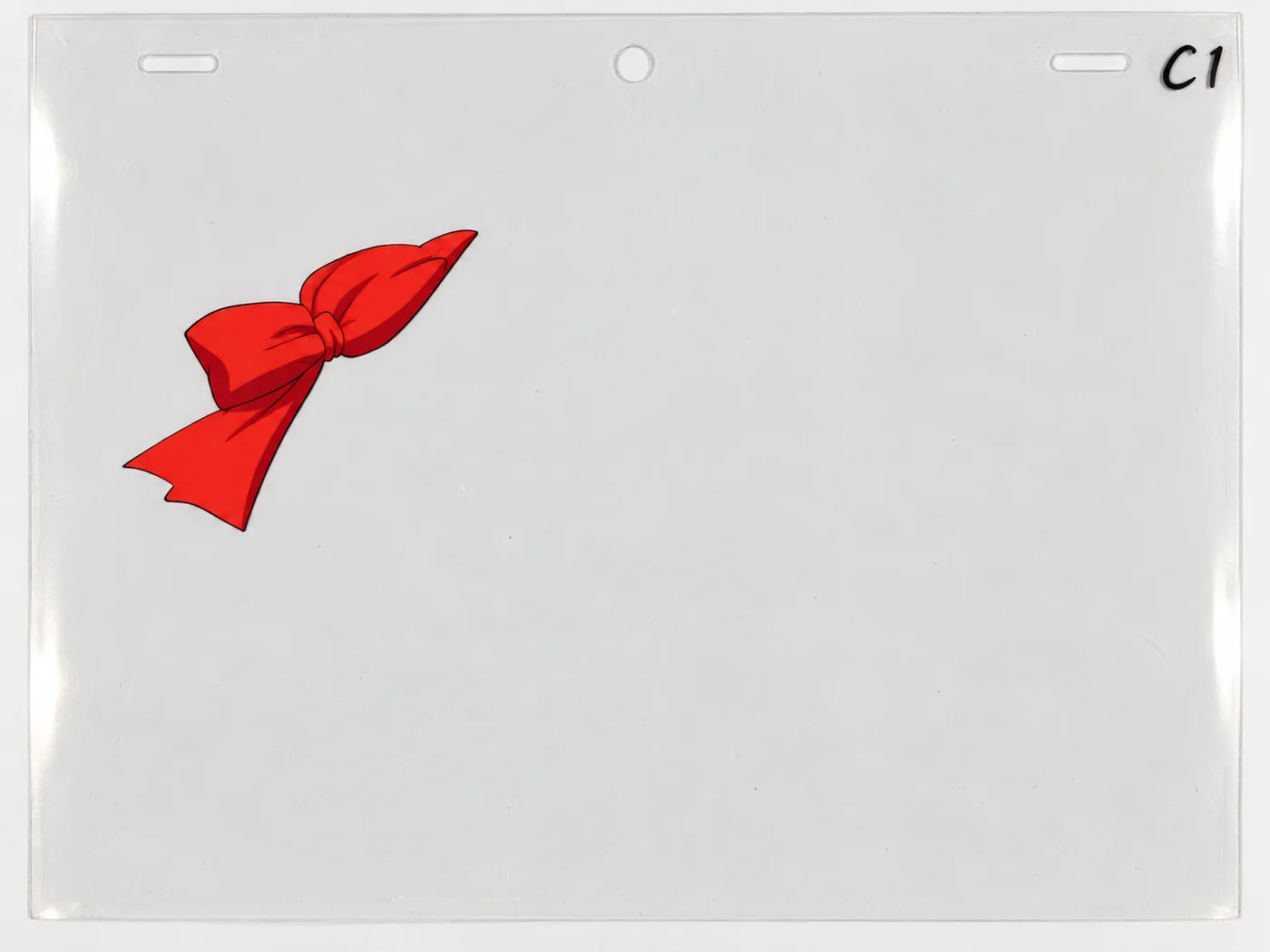
One frame was built from layers: the character on one cel, a moving mouth or arm on another, the background painted on paper underneath. A sheet with the whole picture on it, background included, was not filmed as a frame. The limit: a copy of one layer looks like one layer.
Cut numbers, sequence letters and the layer code were written on the sheet so the camera operator could follow the timesheet. They should agree with each other, with the drawing underneath, and with the cut the image comes from. The limit: a copyist can read the marks on the original as well as anyone, and write them again.
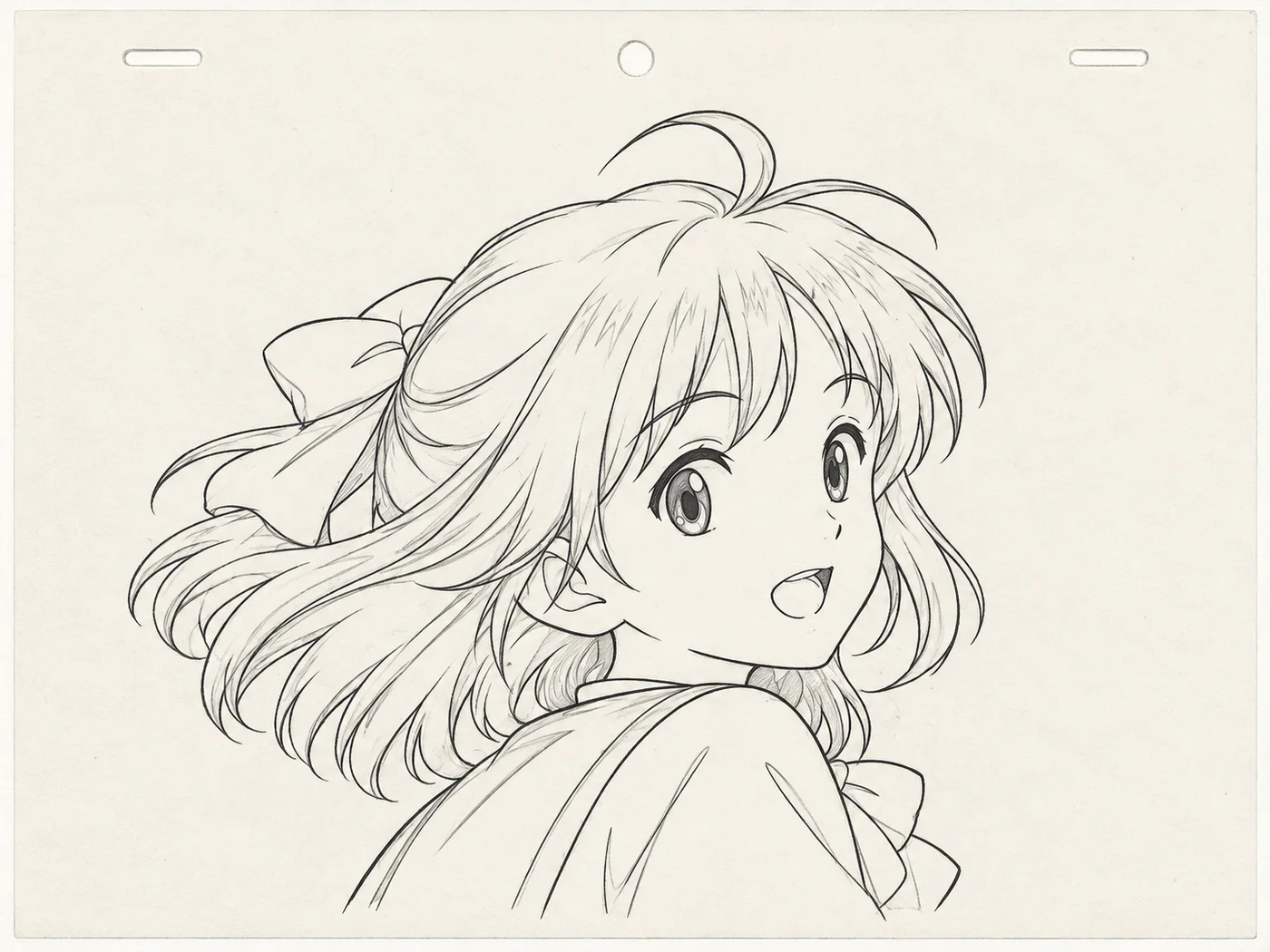
The douga is the finished pencil drawing the cel was traced from. When the cel and its douga are together, the lines match stroke for stroke, and the douga carries its own marks. A copy made from the broadcast image has no douga, or comes with one that does not quite fit. This is the strongest of the paper tells. The limit: dougas get separated and re-paired, sometimes to the wrong cel, sometimes on purpose.
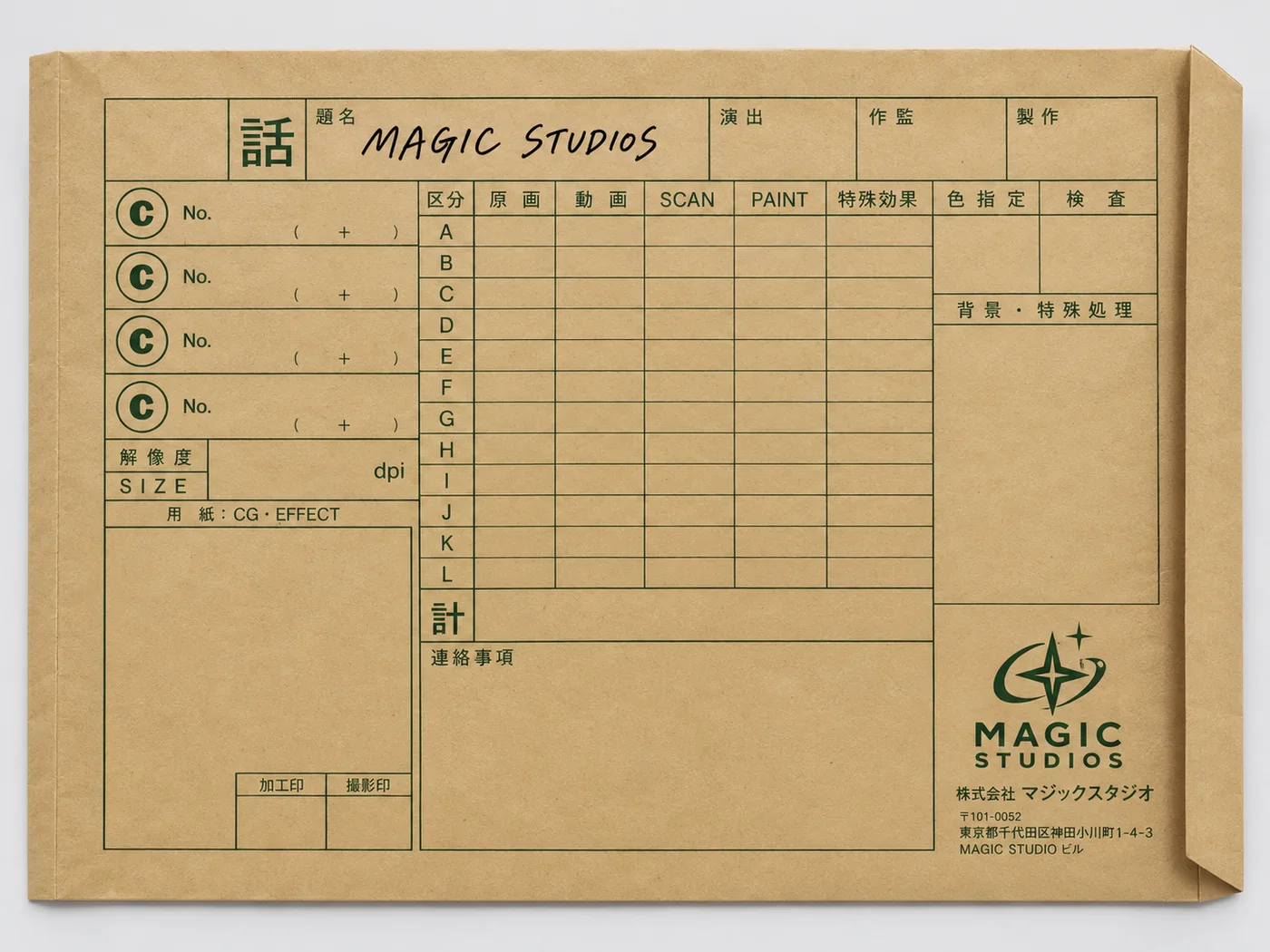
A cut left the studio in its own envelope, marked with the episode and cut, often with its drawings and timesheet inside. The background it was filmed over is a one-of-a-kind painting on paper. A cel that still travels with its bag, its drawings or its matching background carries its own paper trail. The limit: bags and backgrounds are bought and sold on their own, and a real bag can hold a copy.
The material ages. Acetate yellows and can smell of vinegar; the paint can craze, lift or bloom; the line goes brown. A sheet made last year does none of this. The limit: age proves the sheet is old, not that it was filmed. Studios reused old stock, and a copy painted twenty years ago has aged twenty years.
Finding the frame in the episode and laying the cel over it. When they agree, you know which cut the image belongs to. The limit: a copy traced from the broadcast frame matches the frame too. The match places the image; it does not prove the sheet in your hand is the one that was photographed. It is one piece of evidence, never the verdict.
Not every copy is a forgery, and the honest ones are worth knowing by name.
Studio reproduction cels were made and sold by studios and licensed shops as collectibles, painted or printed from the production art and sometimes numbered. They are genuine studio products and were never filmed. Sericels are screen-printed editions, usually in the hundreds or thousands. Fan-painted cels are hand-painted tributes, honest until someone lists them as production. Okoshi is the Japanese collectors' word for a forgery made to pass as a production cel. The crude ones were painted by eye from the broadcast. The dangerous ones were made from a douga that left the studio, run through a trace machine and painted, and the sheet alone cannot be told from the original. That is why studios began collecting their drawings back, and why collectors keep a cel with its douga. Printed copies on acetate are the cheapest and the easiest to see through.
The piece in hand, examined by a named specialist, with everything taken together: the paint and the line under magnification and ultraviolet light; the age of the paint and of the acetate; the genga and the douga it was drawn from, and how they fit it; the provenance; the screen match; and a comparison against our own database of examined pieces, their images, their paint and their materials, with computer vision and trained models doing the comparing and a specialist reading every result. We know the studios, and many of the animators who painted these, and we ask them. No one of these decides. The pattern does.
The result is a signed verdict on what the piece is, written on a public record with the evidence photographed, so the next person who holds the cel can read what was checked without taking anyone's word for it.
Read a record: a GoLion eyecatch cel, examined and documented →
How we authenticate: the method →
It is the strongest of the paper tells, and still not final. Drawings are separated and re-paired, and a copy can be sold with a real drawing. A cel with its douga is a cel worth examining properly.
A certificate is only as good as the name on it and the evidence behind it. Ask who examined the piece, what they checked, and whether you can read that record yourself. A sheet of paper with a logo and no examiner answers none of those, it's just a marketing tactic.
Many are, many are not, and the listing photo cannot tell you which. Knowing the space, the artists, the collectors and the studios is what helps you understand these things.
Some things, not everything. A photo review gives you a professional opinion on what the photographs show, without a grade or a seal. The verdict and the record come from the piece in hand.
Not on that alone. A cel painted for a cut that was dropped, a retake, an animator's own copy and a studio sales cel all fail a screen match, and all are genuine studio cels. The examination says which it is.
Yes: a genuine cel painted by the studio, for a poster or a product rather than the broadcast. It was never filmed for broadcast, so there is no frame to match it to; we match it to the merchandise it was made for instead, and can show you that. The record says which kind it is.
A grade is a condition reading on a date, not proof of anything. A perfect grade on a copy is still a copy. We grade only what we have authenticated, and we never seal a cel in a slab.
Keep it out of the light, do not try to separate stuck layers, and keep every piece of paper that came with it: the bag, the drawings, the receipt. Then have it examined in hand. Everything that came with it is evidence.
Part of the Rinkya Authentic collector's guide. Questions about a specific piece: authentic@rinkya.com.
Cite as: Heather Russell, "Is my anime cel real?", Rinkya Authentic, 2026, https://www.rinkya.com/authentic/guide/is-my-anime-cel-real